
The $25 Billion Pivot: Tesla’s 2026 Strategy for Robotaxis and Autonomy
Alex Carter
Scaling Autonomy: What Tesla’s 2026 Shift Means for Engineering Talent
Tesla has officially entered its "Hardcore AI" era. As of May 2026, the company is shifting from a mass-market automaker to a full-scale robotics and autonomy firm. For engineers and candidates eyeing a role at Giga Texas or Palo Alto, the landscape has changed.
Here are the three critical updates you need to know:
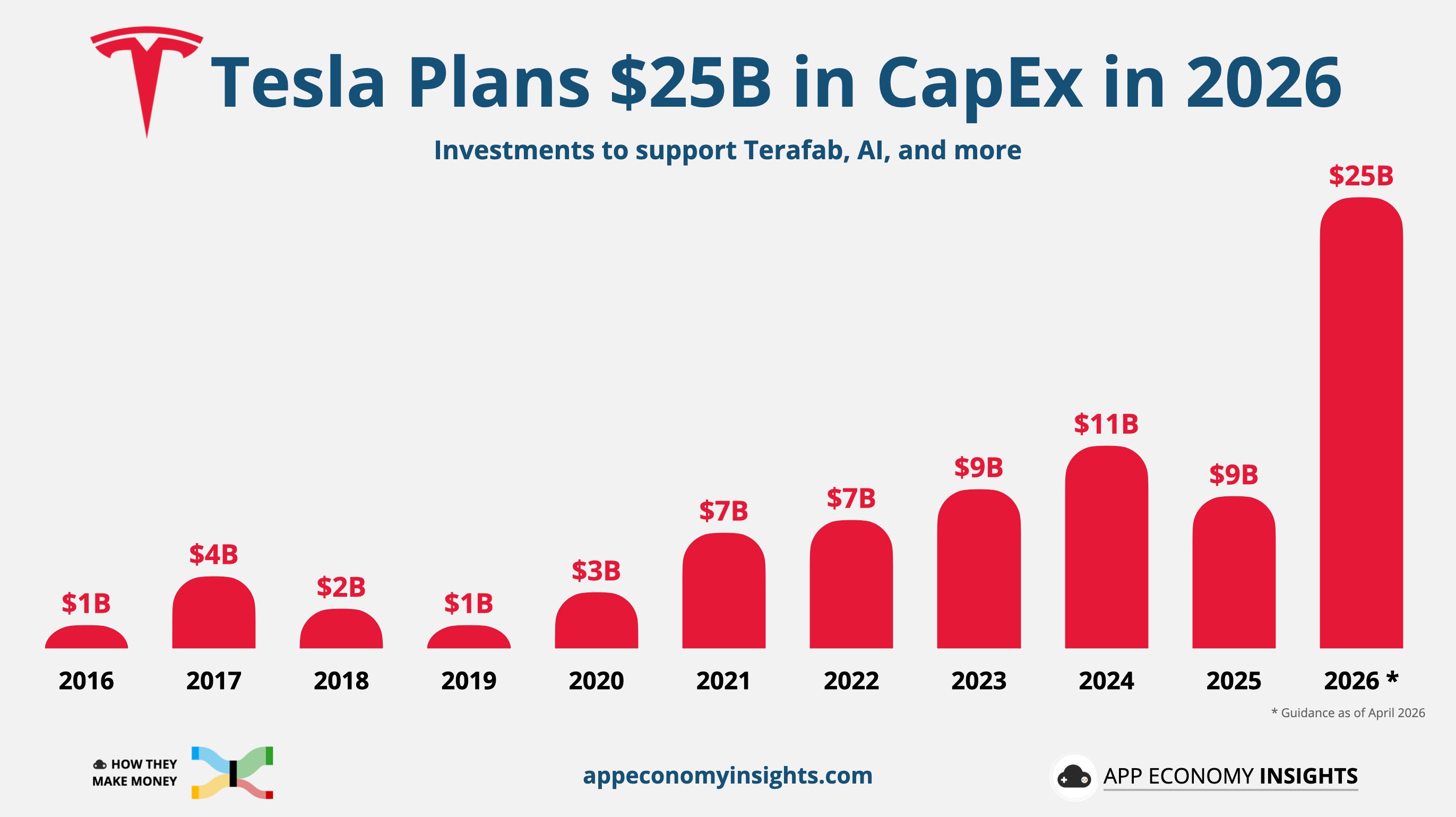
- The $25 Billion Capex Surge Tesla recently revised its 2026 capital expenditure guidance to $25 billion. This isn't just for factory lines; it’s a massive investment in AI compute and the Cybercab production ramp.
Engineering Impact: A heavy focus on Dojo training infrastructure and distributed computing.
Interview Prep: If you're interviewing for backend or infrastructure roles, expect deep dives into high-scale data processing.
- The Hardware 3 vs. AI4 Pivot A major technical milestone was reached this month as Tesla surpassed 10 billion miles driven on FSD (Supervised). However, the recent Q1 earnings call highlighted a pivot: hardware 3 vehicles face limitations for unsupervised autonomy. The focus is now firmly on AI4 (Hardware 4).
Interview Tip: Be prepared to discuss hardware-software co-design. Tesla is looking for engineers who understand how to optimize neural networks for specific silicon constraints.
- Cybercab and the "Miami Showcase" At the recent F1 Miami Grand Prix, Tesla showcased the Cybercab in its first major public festival appearance. With a target production cost of under $30,000 and an operating cost of $0.20 per mile, the engineering challenge has shifted from "Can we build it?" to "Can we scale it at this price point?"